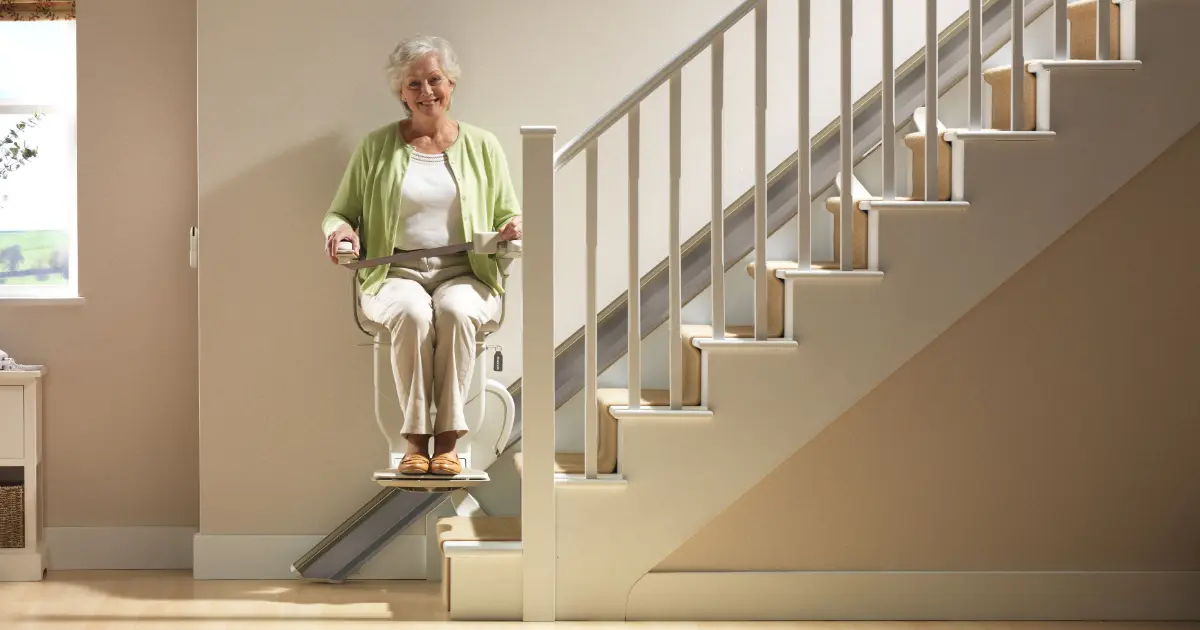
Current professionally installed guidance commonly places a new straight indoor stair lift around $3,500 to $7,500. A new custom curved system commonly runs about $10,000 to $20,000 or more, while outdoor straight systems often fall around $6,000 to $10,500 or more.
Reputable dealer quotes often bundle measurement, rail, equipment, delivery, installation, testing, training, and warranty rather than listing one universal labor charge. Ask for an itemized total and compare it with any online price that may exclude delivery, installation, or service.
A curved rail is not a standard part cut to length. It must be measured, designed, and manufactured for the staircase’s bends, pitch changes, landing, and desired parking position. That custom rail and engineering create most of the price difference.
A dealer-inspected used straight lift can be a practical option when the rail and components fit, parts remain available, and professional installation and a written warranty are included. A private-sale unit should be checked by the provider who will install and service it before purchase.
Usually not in another home. A curved rail is made for one staircase. Some chair or carriage components may be reconditioned, but a new rail normally must be designed and fabricated for the new staircase.
Rental can make sense for a temporary recovery or clearly limited need, especially on a straight staircase. Compare setup, minimum term, monthly charge, included service, removal, and purchase alternatives. The better choice depends on local inventory and expected duration.
Original Medicare generally does not cover an ordinary residential stair lift or home modification. Some Medicare Advantage plans may offer plan-specific supplemental benefits, so confirm eligibility, vendor rules, and authorization with the individual plan before purchase.
Florida Medicaid’s Long-Term Care program includes a Home Accessibility Adaptation benefit, but that does not guarantee a stair lift. Eligibility, the plan of care, authorization, and the managed-care plan determine whether a proposed adaptation can be approved.
VA HISA explicitly excludes stair glides, so it should not be presented as a stair-lift benefit. Eligible Veterans can ask Prosthetic and Sensory Aids Service about individual equipment pathways and separately investigate SAH or SHA adapted-housing programs when applicable.
A medically necessary home capital improvement may be relevant under federal medical-expense rules in some circumstances, but itemization, the medical-purpose test, property-value rules, and the 7.5%-of-AGI threshold matter. Review IRS Publication 502 and consult a qualified tax professional.